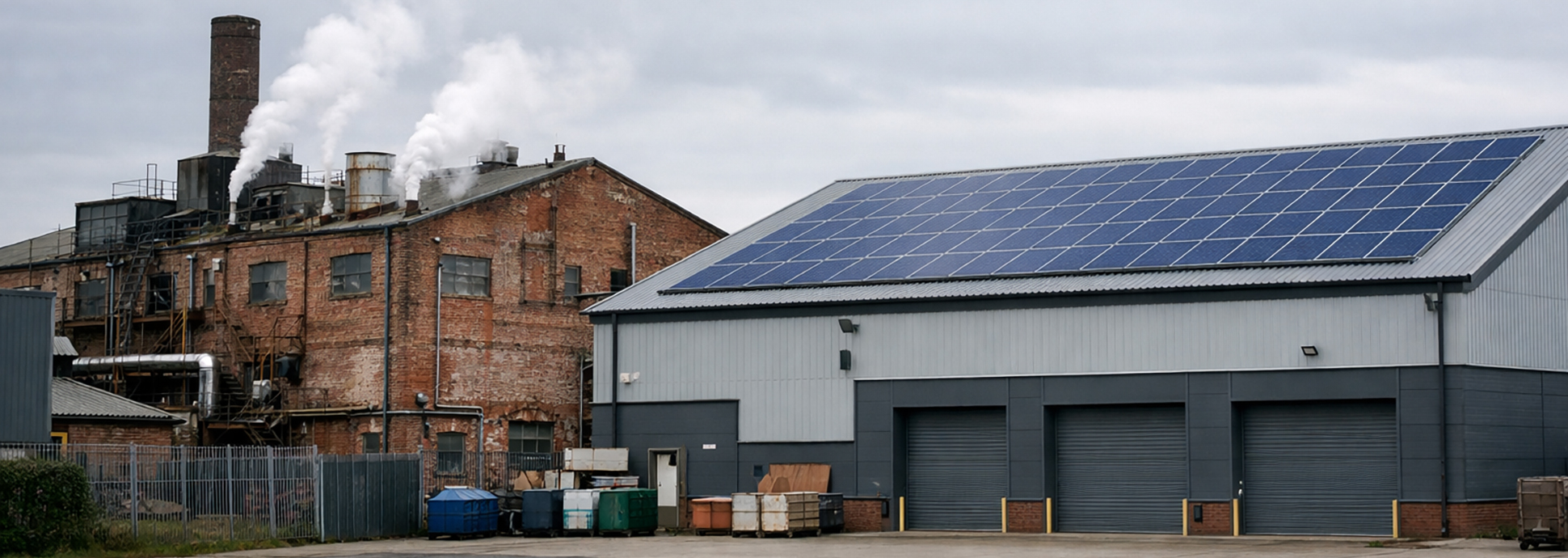
Coal as a source of energy
Coal became a dominant source of energy because it stores a large amount of usable heat. When burned, it releases that heat in a concentrated and controllable way. This made it suitable for systems that required continuous and reliable energy input.
The key advantage was availability combined with energy density. Large amounts of fuel could be transported, stored, and used as needed, allowing power to be generated independently of natural conditions such as wind or water flow.
How coal produced power
The basic process was centred on heat. Coal was burned in a furnace, producing high temperatures. This heat was used to convert water into steam. The steam expanded and created pressure, which was directed through engines or turbines.
As the steam moved through the system, it drove mechanical components. These components could be used directly or connected to generators to produce electricity. Once the steam had passed through, it was cooled and returned to water so the cycle could continue.
This approach allowed continuous power generation as long as fuel was supplied.
Control and consistency
One of the defining features of coal-based systems was control. Output could be adjusted by changing how much fuel was burned. This allowed power to be increased or reduced depending on demand.
Unlike systems that depended on natural movement, coal-based generation could run at a steady level for long periods. This made it suitable for situations where predictable output was required.
Efficiency and limitations
Coal systems were effective at producing large amounts of energy, but efficiency varied. Some energy was lost as heat escaping from the system, and mechanical processes introduced further losses.
Improved designs were able to recover some of this energy, but the process still involved multiple stages, each with its own inefficiencies. Even so, the ability to generate power consistently often outweighed these limitations.
Scale of operation
Coal-based generation could be scaled up significantly. Larger systems were capable of producing substantial amounts of power, supplying wide areas or supporting large operations. This made it a central part of wider energy systems.
The ability to concentrate production in one place and distribute power elsewhere helped shape how energy networks developed.
Operational demands
Running coal-based systems required continuous fuel supply and regular maintenance. Combustion created by-products that needed to be managed, and equipment operating at high temperatures required careful monitoring.
Despite these demands, systems could operate reliably when maintained properly. The main requirement was a steady supply of fuel and attention to operating conditions.
How it fits into the wider picture
Coal-based power provided a controllable and scalable way to generate energy. It allowed systems to operate independently of natural variability, offering stability where it was needed.
Although other methods now contribute to energy supply, the principles established during the coal era, controlled input, continuous operation, and scalable output, continue to influence how power is generated and managed today.